Flyway City: Architecture for a Flourishing Ecosystem
To purchase exhibition tickets or for more information, visit the Chicago Architecture Center.
Location
Chicago Architecture Center, Chicago, IL
On View
June 11, 2026 –
April 11, 2027
Curation
Studio Gang in collaboration with the Chicago Architecture Center
Exhibition Design
Studio Gang
Graphic Design
Span
Tags
Building on Studio Gang’s 20 years of work on bird-safe design, this exhibition reveals how people can take action to create healthier urban habitats and save birds from colliding with building glass—a problem that currently kills more than 1 billion birds each year in the United States.
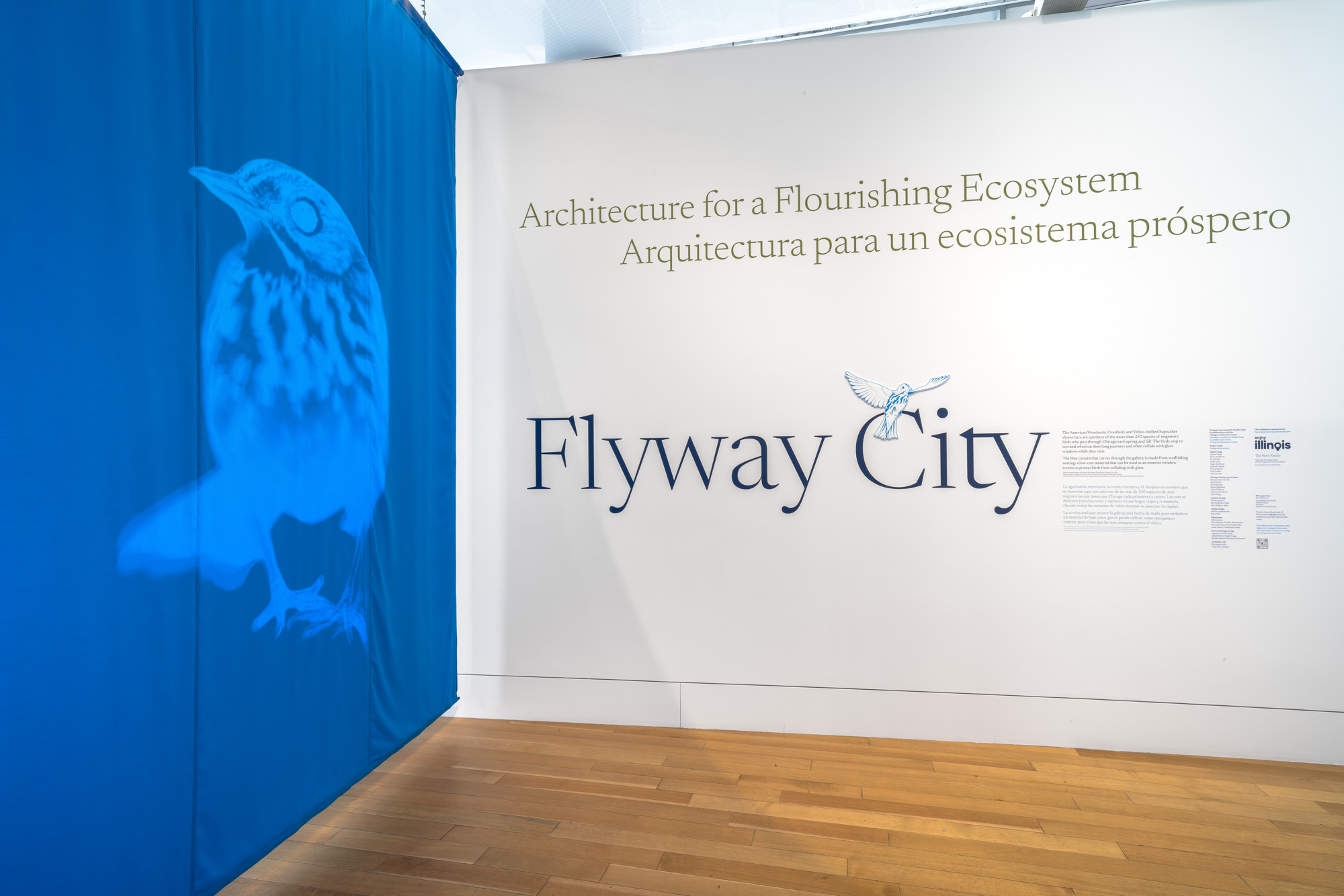
Large-scale migratory birds greet visitors as they enter the exhibition, part of the video work Animal Land: Chicago by artists Kendra Sollars and Lauren Strohacker.
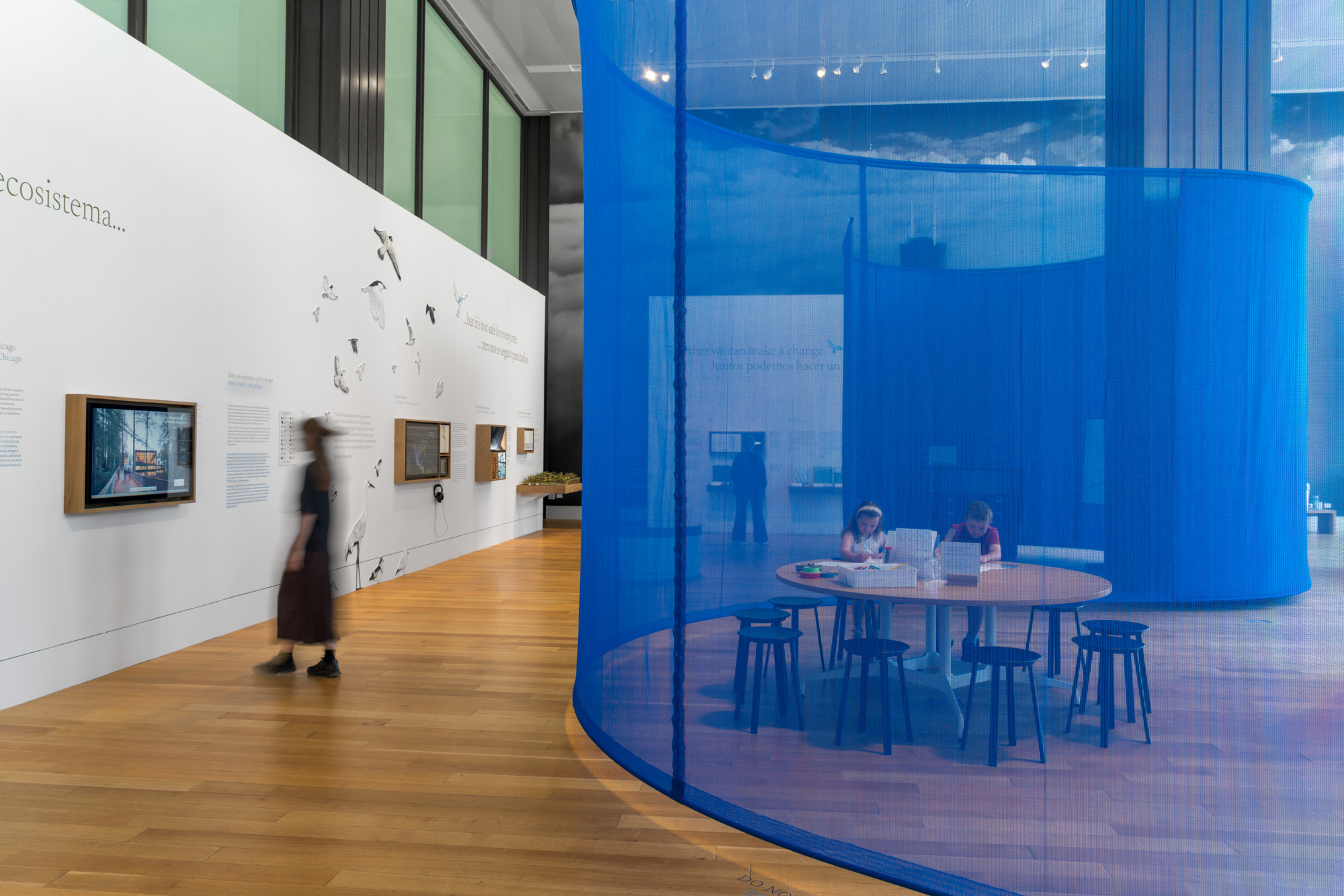
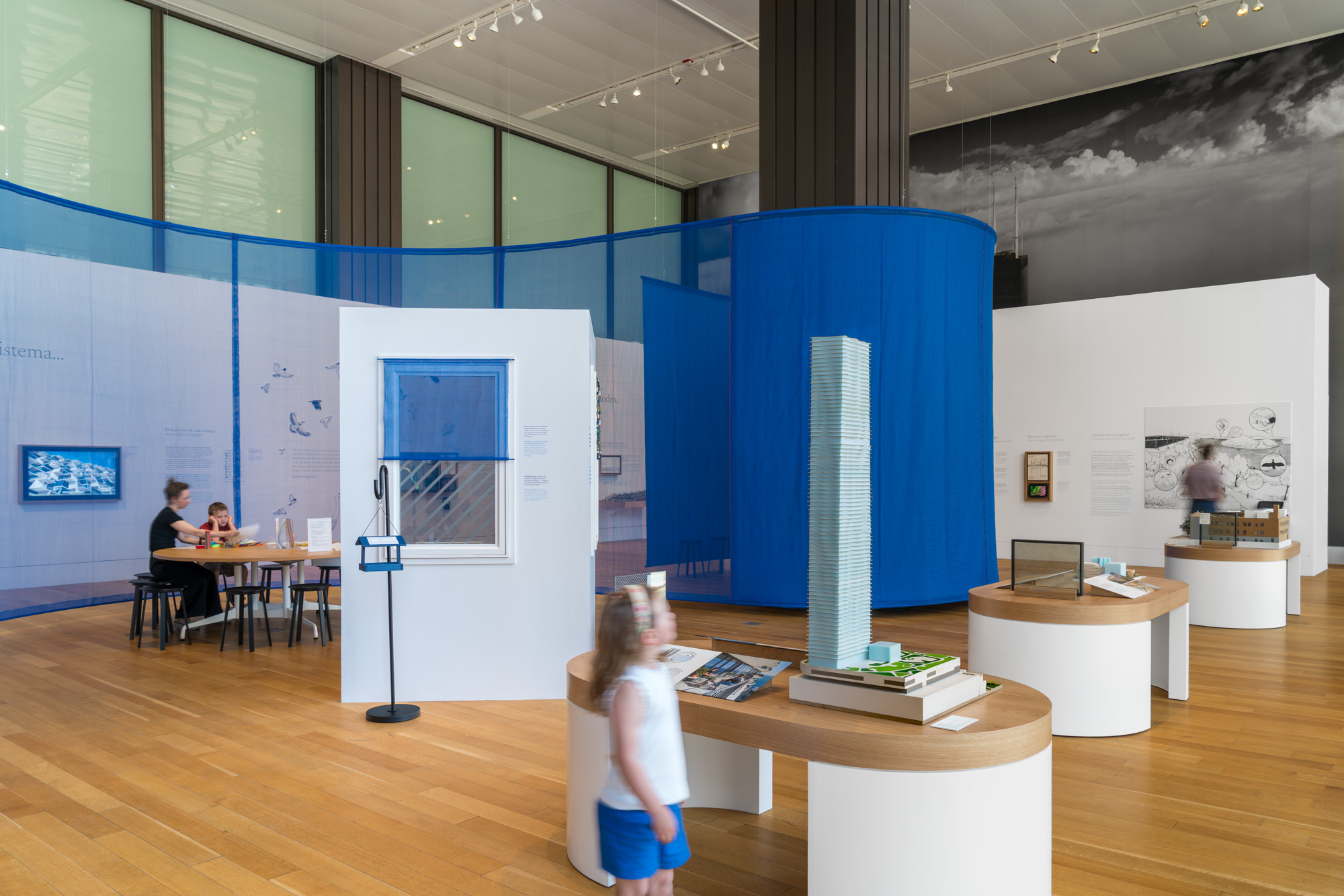
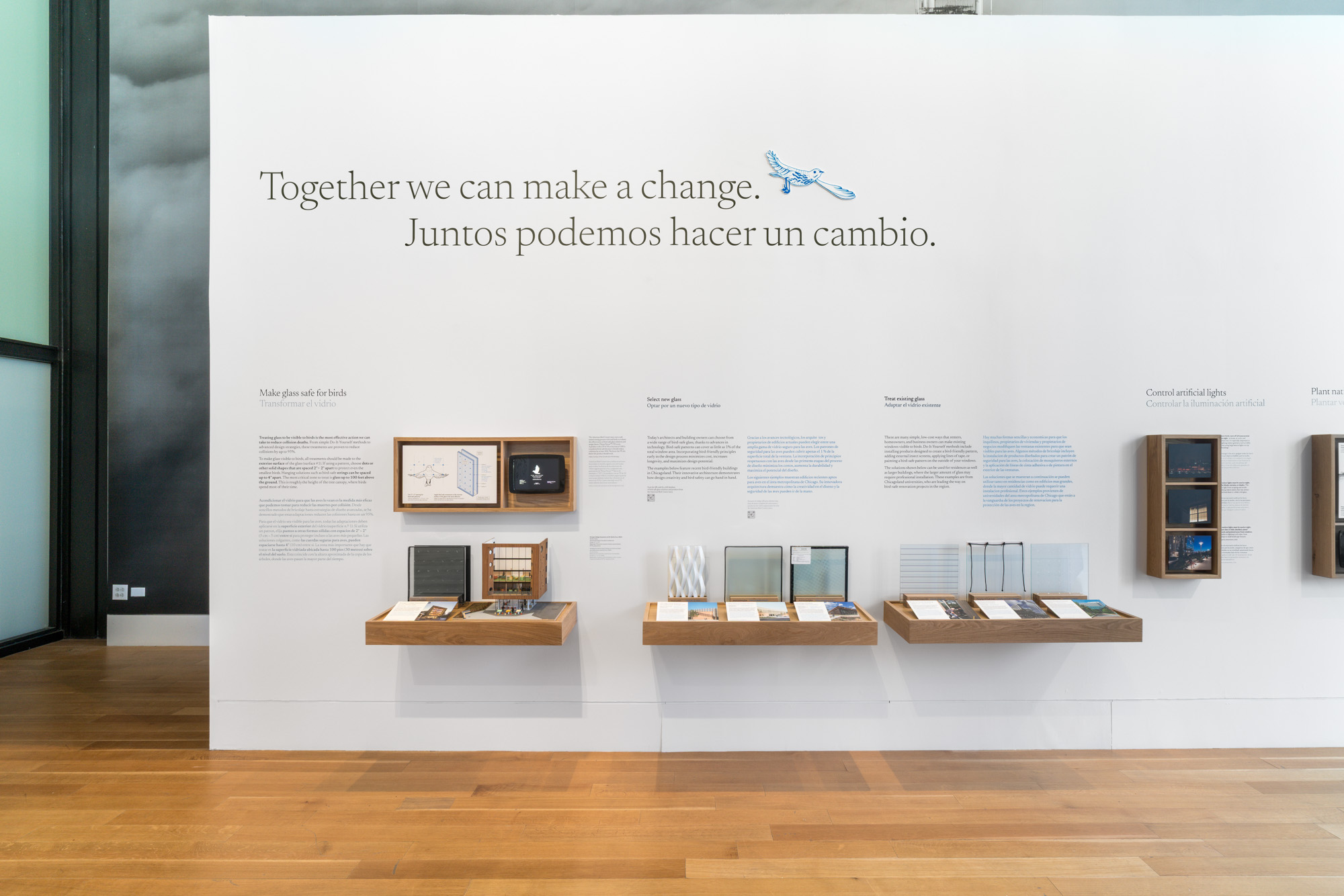
A curving curtain guides visitors through the gallery, where they discover the importance of birds, the wonder of their migratory journeys, and the many proven ways to protect them from glass collisions. These solutions range from simple DIY methods that make glass visible to birds to advanced design techniques.
The exhibition features architectural models and mock-ups, original illustrations, photography, building materials, and interactive media, along with bird-related artifacts from local Chicago organizations and individuals. Studio Gang projects are displayed among other examples of bird-safe architecture, including the Aqua Tower, Ford Calumet Environmental Center, and Kresge College Expansion at the University of California, Santa Cruz.
Designed to connect with visitors both intellectually and emotionally, the show invites everyone to take part in making Chicago a leading Flyway City and flourishing ecosystem for all.
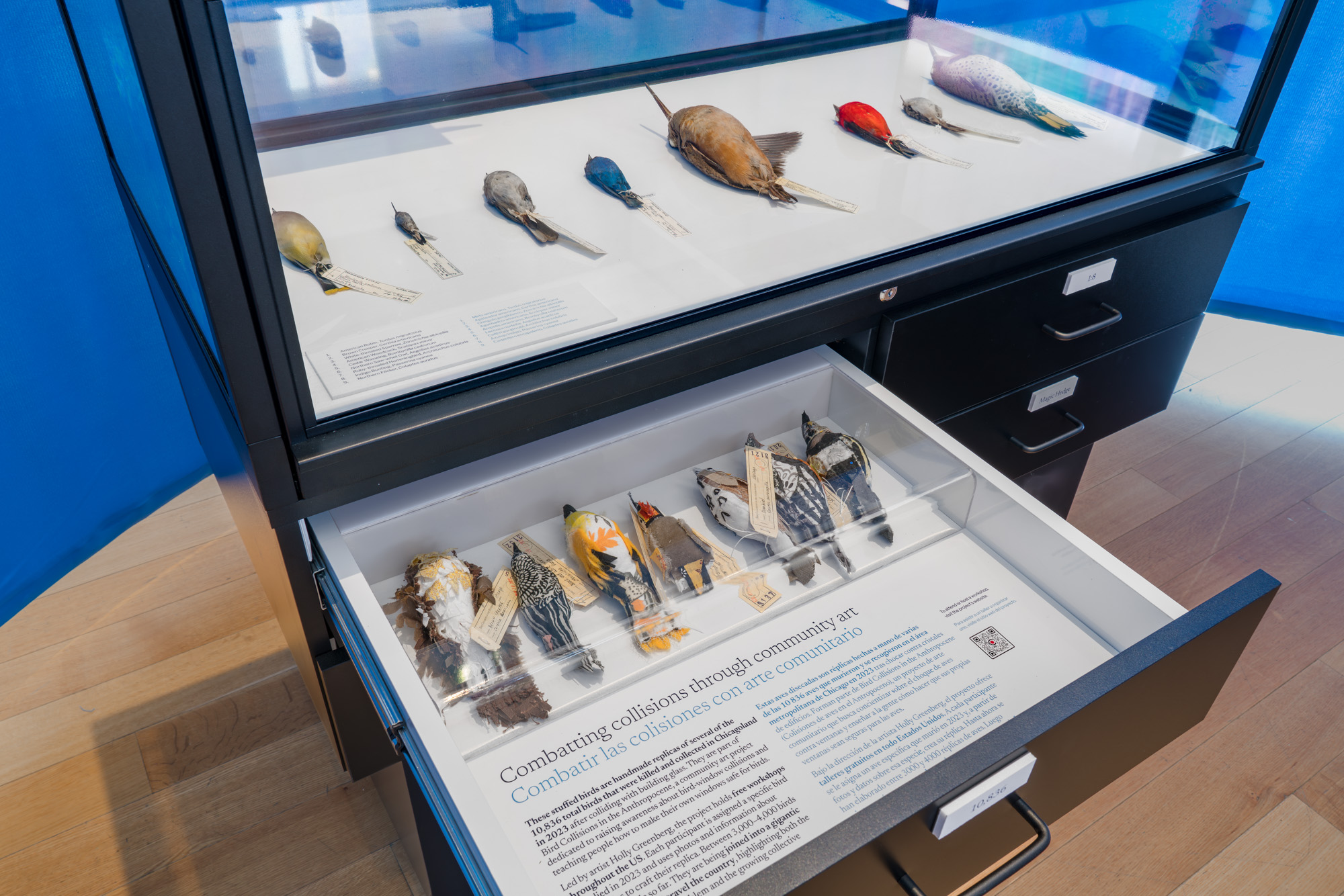
Bird specimens from the Field Museum’s collection of Chicago collision victims are displayed in a large case, with replicas crafted by community members in a drawer below.
Project Team
Curation: Studio Gang and the Chicago Architecture Center
Exhibition Design: Studio Gang
Graphic Design: Span
Media Design: Brice Puls
Fabrication: Navillus Woodworks, MoormanWorks, Production Mode
Structural Engineering: Joseph Burns; Rachel Jackson, Thornton Tomasetti
Printing: Colorphonic
Research Sources
Dr. Bryan Lenz (American Bird Conservancy), Bird Collision Prevention Alliance, Bird Friendly Chicago, Center for Biological Diversity, Chicago Bird Alliance, Chicago Bird Collision Monitors, Chicago Ornithological Society, Cornell Lab of Ornithology, Field Museum, FLAP Canada, Heidi Trudell (Guardian Glass), National Audubon Society, North American Bird Conservation Initiative, The Nature Conservancy, US Fish and Wildlife Service
Sponsors
Enjoy Illinois
Walder Foundation
The Horn Family
The Nature Conservancy
The Comer Foundation Fund at The Chicago Community Foundation
Forest Preserves of Cook County
With support from
Ed and Melissa Harmening
Feather Friendly
Skyline Architectural Glass
The blue curtain is made from scaffolding netting: a low-cost material that can be used as an exterior window screen to protect birds from colliding with glass.
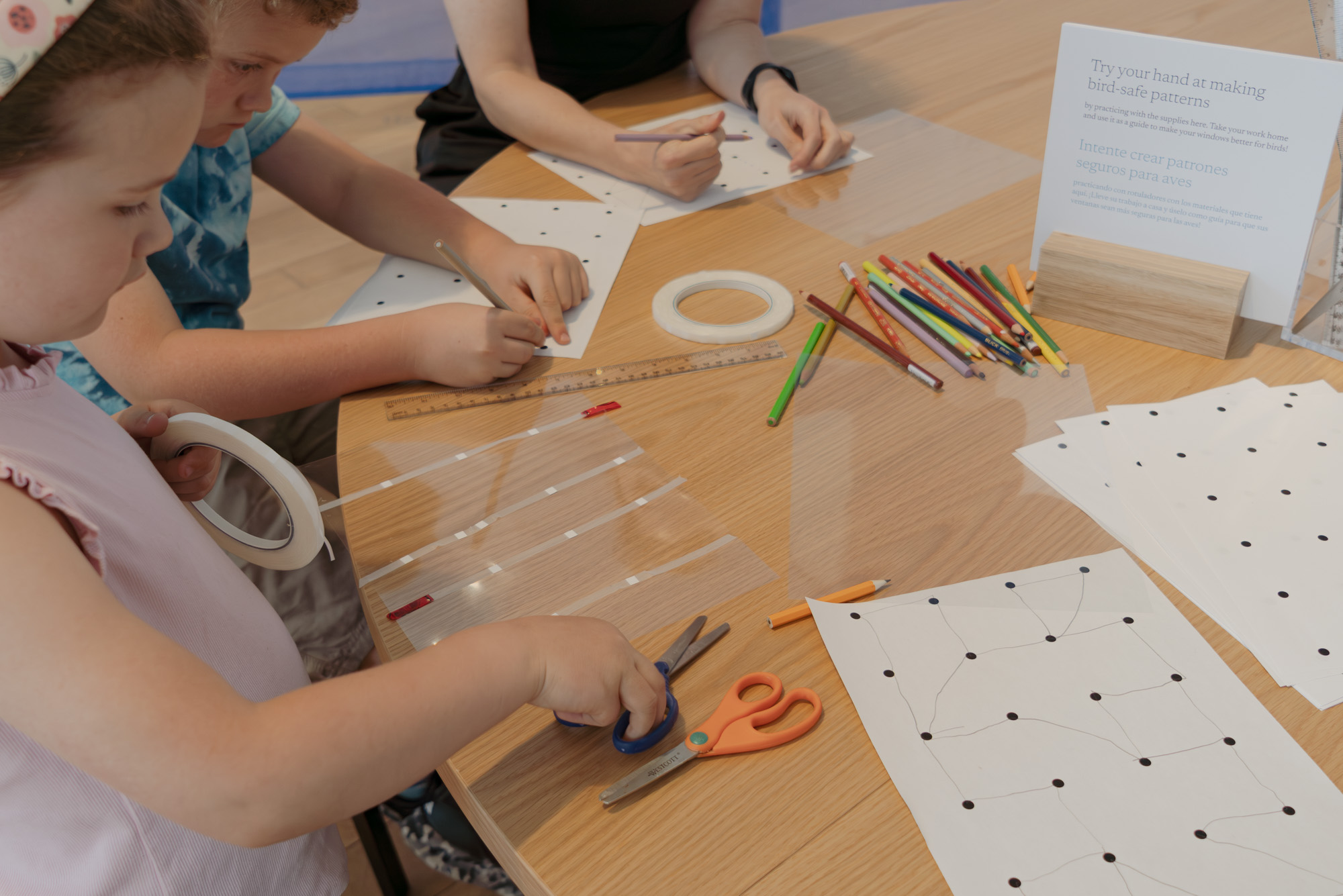
Kids and adults can try their hand at making bird-safe patterns at the maker table.
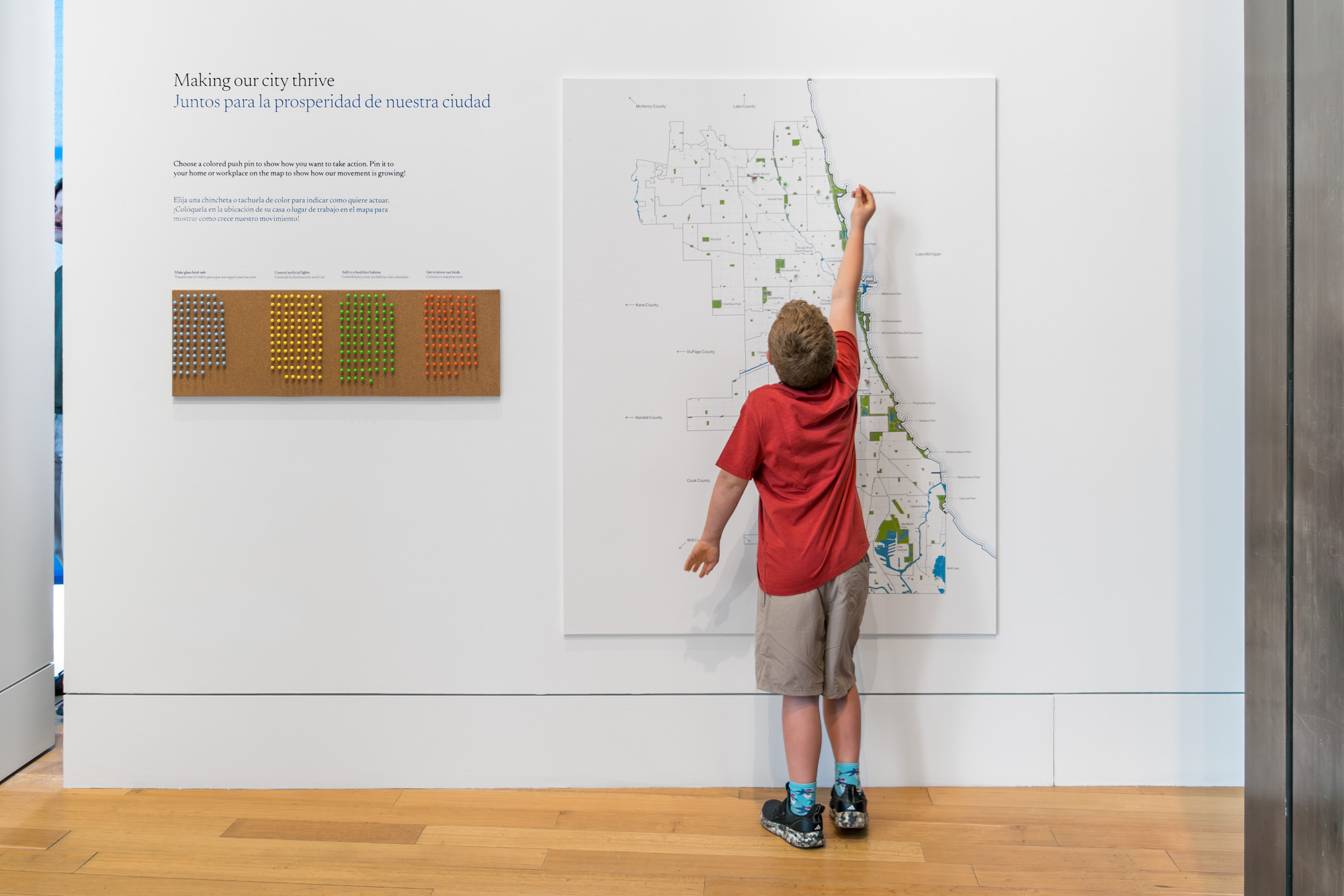
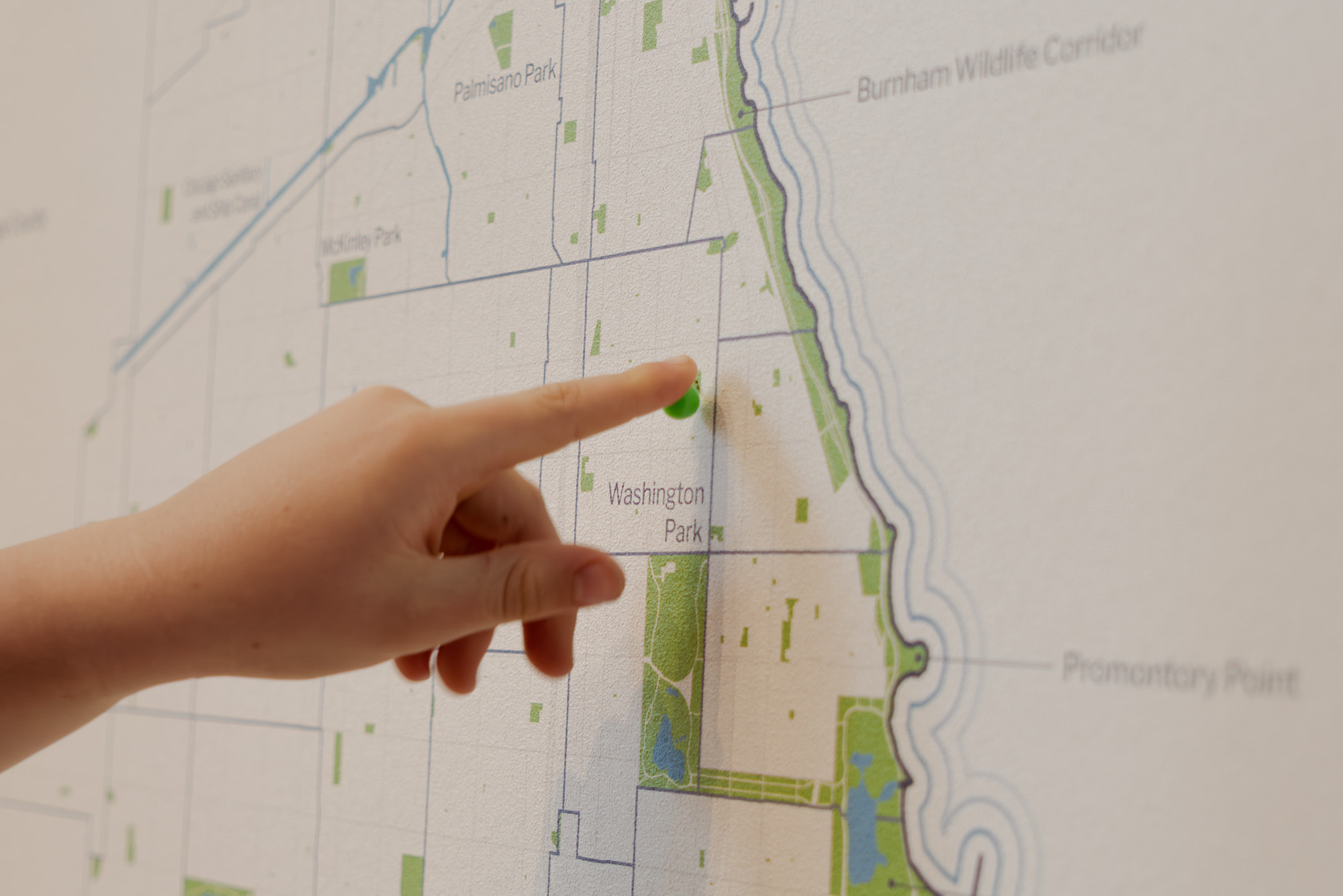
Visitors can add a colored pin to a map of Chicago to show how they want to take action to make the city safer for birds and improve our shared urban habitat.
Call to Action
Chicago residents, now is the time to advocate for the Chicago Bird-Friendly Building Design Ordinance! This proposed legislation will require that all new large-scale new construction projects and major renovations use bird-safe facade materials in the first 100 feet above the ground, the critical zone for preventing bird collisions.
To learn more and reach out to your Alderperson, visit ChicagoCollisionsCoalition.org.
Related
Studio Gang and the Chicago Architecture Center Spotlight Bird-Friendly Architecture & Design in Inspiring New Exhibition "Flyway City"

Opening June 11, 2026, this new exhibition aims to catalyze positive change on making cities safer and more welcoming for birds and diverse wildlife.
WTTW Urban Nature — “Building a Bird-Safe City”

Jeanne Gang is featured in this video highlighting efforts to build a bird-safe city.

The Urban Audubon — "Studio Gang Begets Bird-Friendly Beauty on Tenth Avenue"

“NYC Audubon welcomes this beautiful new ecology-minded structure. It may serve as an inspiring example for future bird-friendly design, as it includes many features now required in all new construction in the City, thanks to new legislation recently passed by the New York City Council.”
Citylab — "Buildings Don't Have To Be Bird-Killers"
“The surprising uptake of birding as a pandemic hobby, along with social media and data collection tools like eBird and dBird, has created new visibility for bird collisions with glass, which kill as many as 1 billion birds in the U.S. per year. At the same time, a new generation of urban parks has given birds more places to roost in highly populated areas. But something else has followed these parks as well: real estate capital. The vogue for urban parks creates more economic impetus to build shiny buildings with big windows opposite those urban wetlands, glades and groves.”