Studio Gang and the Chicago Architecture Center Spotlight Bird-Friendly Architecture & Design in Inspiring New Exhibition "Flyway City"
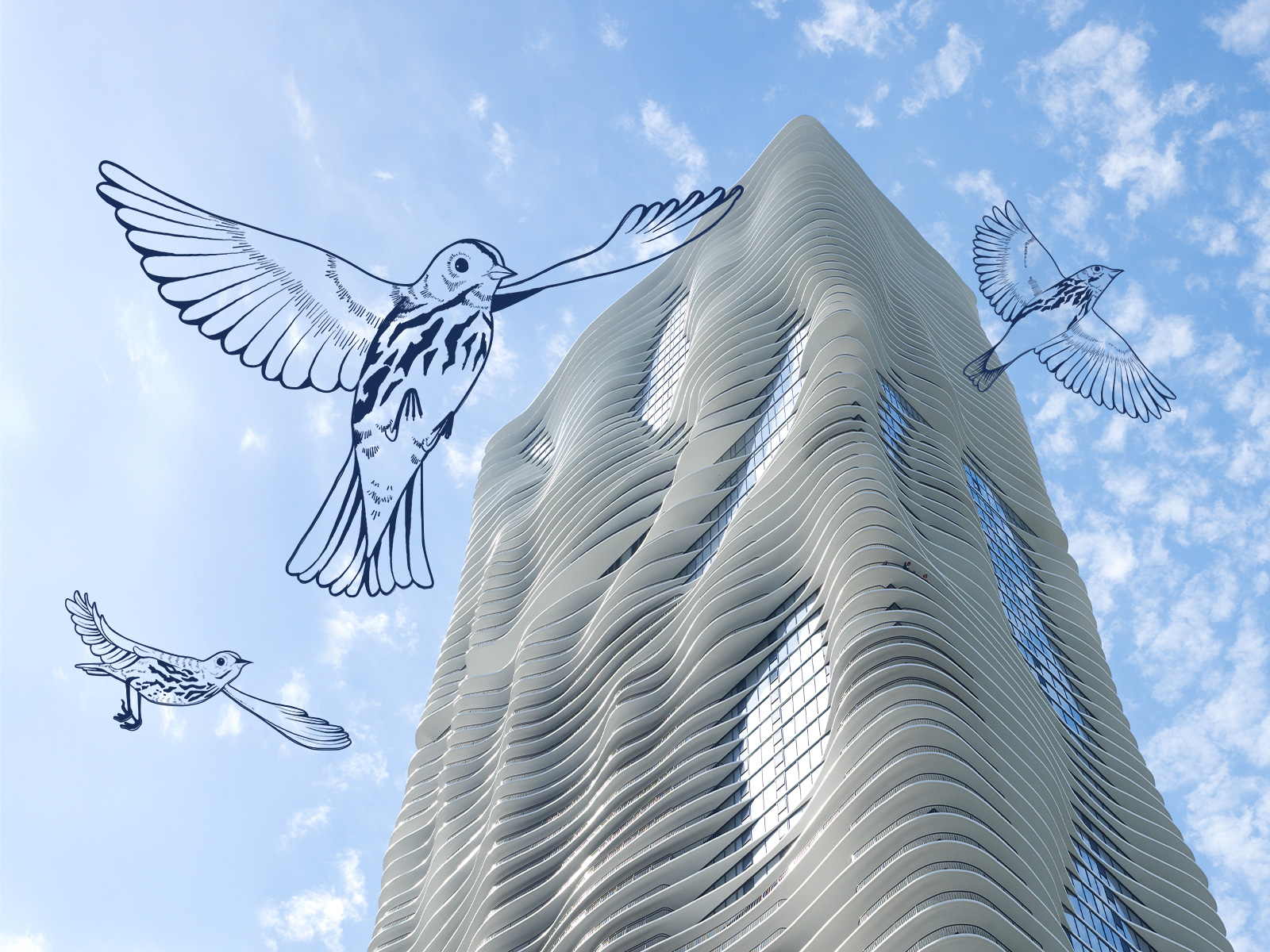
The Chicago Architecture Center (CAC) announces two complementary exhibitions addressing the intersection of urban design and natural environments. The inspiring and revelatory new exhibition, Flyway City: Architecture for a Flourishing Ecosystem, designed and co-curated by Studio Gang – the architecture and urban design practice founded in Chicago and led by world-renowned architect Jeanne Gang – in collaboration with the Chicago Architecture Center, aims to catalyze positive change on making cities safer and more welcoming for birds and diverse wildlife. The exhibition reveals how people can take scalable action to create healthier urban habitats and save birds from colliding with building glass – a problem that currently kills more than 1 billion birds each year in the United States.
Upon entry to the exhibition galleries, visitors will experience Chicago’s Living Habitat, a companion exhibition co-curated with conservation organization Openlands. This exhibition introduces visitors to five distinct ecosystems of the Chicago region – wetland, prairie, dunes and swales, woodland and urban wildlife – to ground visitors in the stunning diversity of the broader Chicagoland region where so many species, including humans, have made their homes. Flyway City and Chicago’s Living Habitat open June 11, 2026 at the Chicago Architecture Center, 111 E Wacker Drive.
“These exhibitions can engage the hearts and minds of the public to imagine how cities can be designed to support both people and wildlife,” said Eleanor Esser Gorski, AIA, CEO and President of the Chicago Architecture Center. “The objectives of these exhibitions perfectly align with CAC’s mission to inspire better living through design.”
About Flyway City: Architecture for a Flourishing Ecosystem
Chicagoland is a living habitat home to diverse people, animals and plants. An especially attractive habitat for wild birds, the region hosts millions of avian visitors each spring and fall as they fly along the Mississippi Flyway, a major migration route that spans from Canada to South America. While their migratory journey is regarded by many as a natural wonder, birds often collide with glass — a material they cannot see — used in buildings from single-story homes to skyscrapers. Chicago poses a particular danger to birds because of the city’s location on the Mississippi Flyway and its prevalent use of glass as a building material, presenting an opportunity to explore effective approaches to creating a bird-safe built environment that also inspires design creativity and innovative urban development. These approaches range from making simple updates to the windows of homes and workplaces, to designing new bird-friendly buildings, to advocating for policy change.
“Bird-safe design is a critical issue that my team and I have been working on for more than 20 years. We’re delighted to collaborate with the Chicago Architecture Center on this new exhibition that’s designed to expand public awareness and spark positive action in our home city of Chicago. With our location on the Mississippi Flyway, Chicago is a critical stop for many migratory birds. It’s a wonderful opportunity to observe nature in our city and we have a responsibility to better protect birds from colliding with buildings,” said Jeanne Gang, FAIA, Founding Partner of Studio Gang. “I hope Flyway City inspires a new class of bird-safe design advocates and helps our city advance its legacy of innovative architecture.”
Flyway City features a selection of Studio Gang projects, including the iconic Aqua Tower in downtown Chicago and more recent work such as the David Rubenstein Treehouse at Harvard University, that offer bird-safe design strategies. On view will be architectural models and mock-ups, original illustrations, photography, building materials, and interactive media, along with bird-related artifacts from local Chicago organizations and individuals.
Supported by scientific research and Chicago’s thriving community of bird advocates and enthusiasts, Flyway City invites everyone to take part in making Chicago a flourishing ecosystem for all.
Flyway City runs through January 2027 at the Chicago Architecture Center.