Eastern Parkway
Location
Brooklyn, New York, USA
Status
In design
Client
Coconut Properties and The Doe Fund
Type
Residential
Size
314,000 sf / 227 ft / 20 stories
Sustainability
Targeting Enterprise Green Communities (EGC) Certification
How might we reimagine affordable housing as an anchor that transforms an underused site into a sustainable and welcoming social hub?
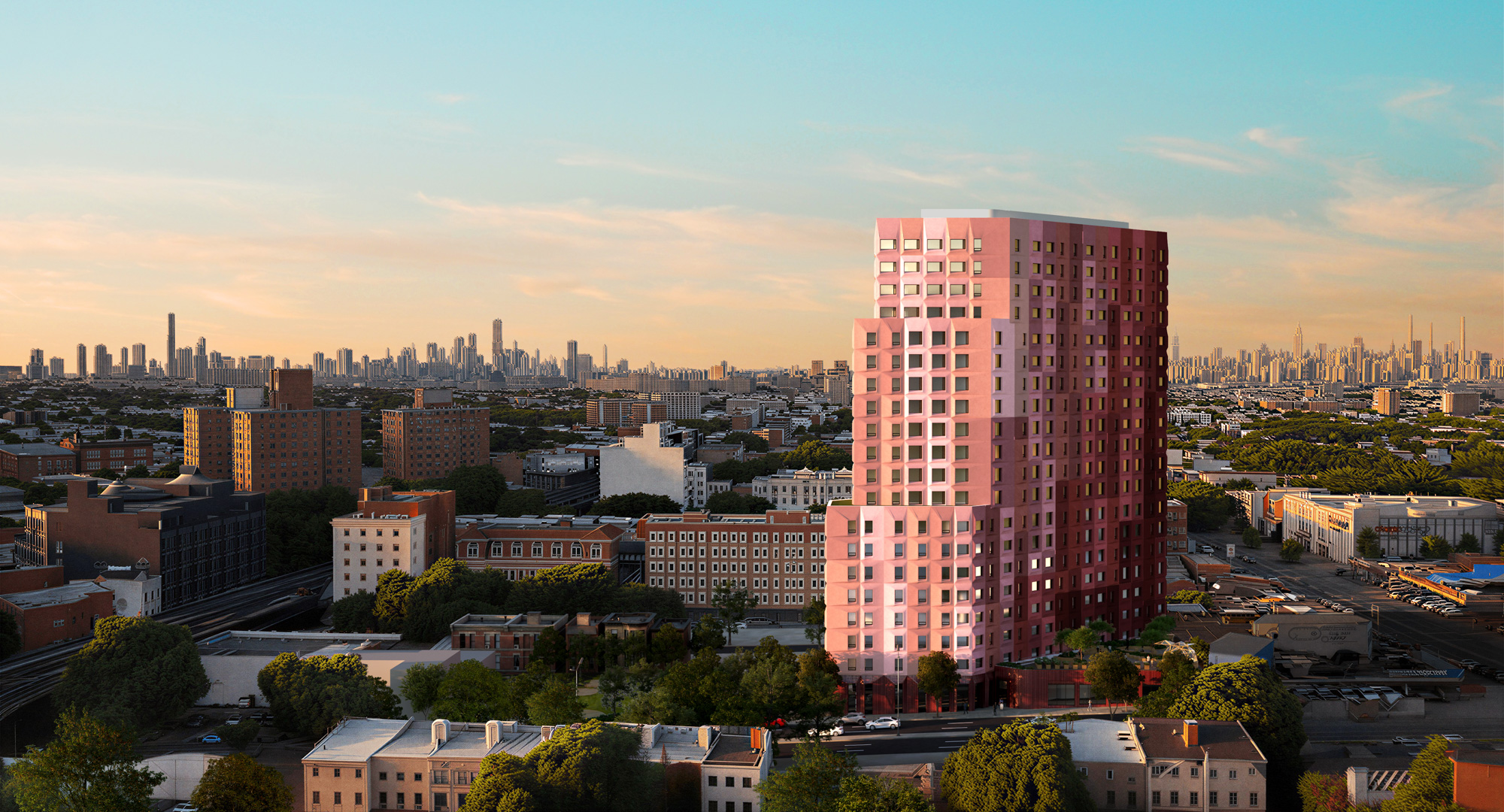
Broadway Junction is a major transit hub in east Brooklyn where multiple neighborhoods, train lines, and street grids converge. The Eastern Parkway project will bring new affordable and supportive housing to this busy corner of the city, converting a former bus depot into a welcoming and peaceful residential building with more than 370 apartments. The design uses the strong diagonal geometry of the site—carved out by the train line beneath the block—to create inviting spaces that draw residents in and help them feel grounded in the larger community.
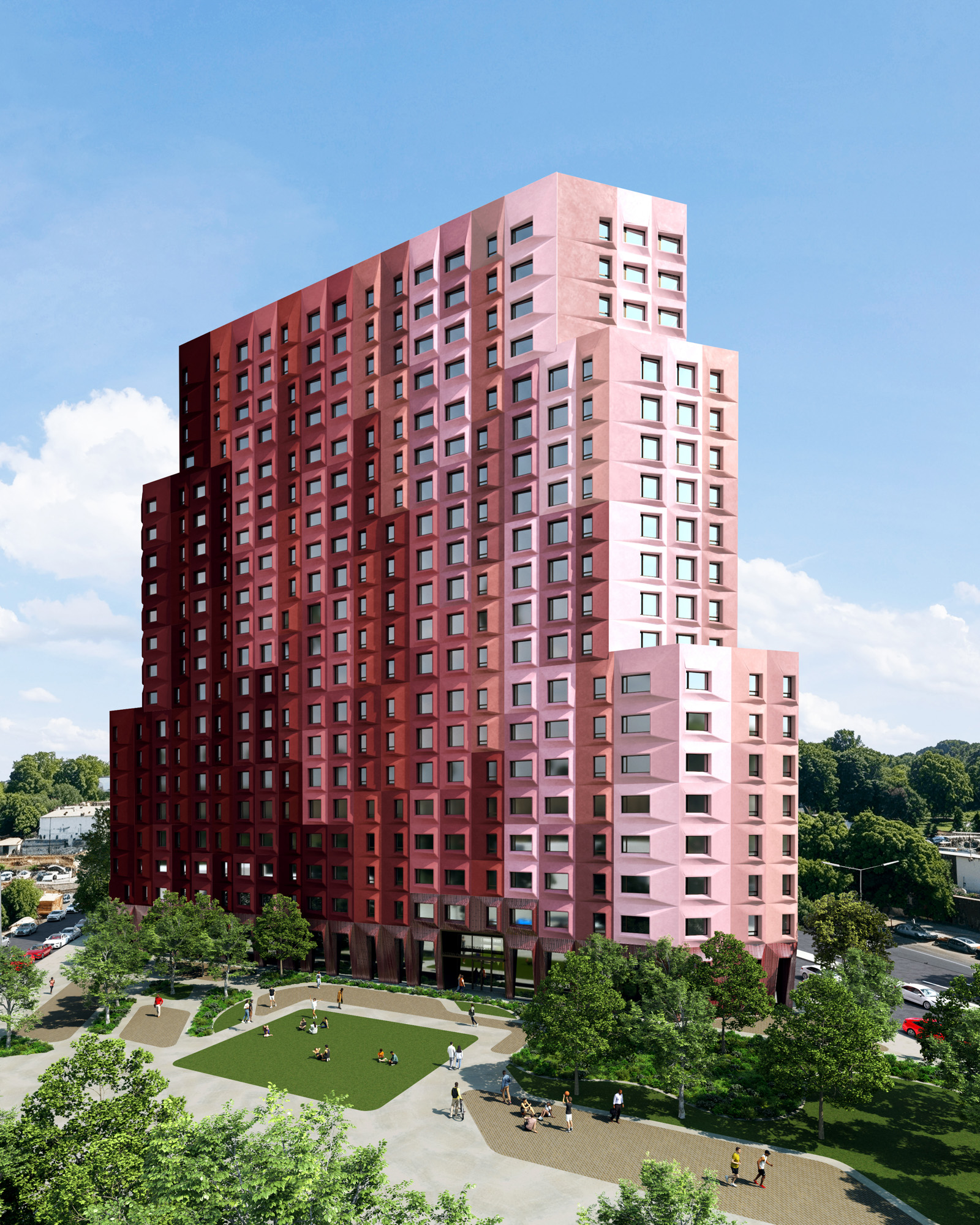
Open to the street, a tree-lined plaza with comfortable bench seating enlivens the building’s southern corner and connects residents to the lobby.
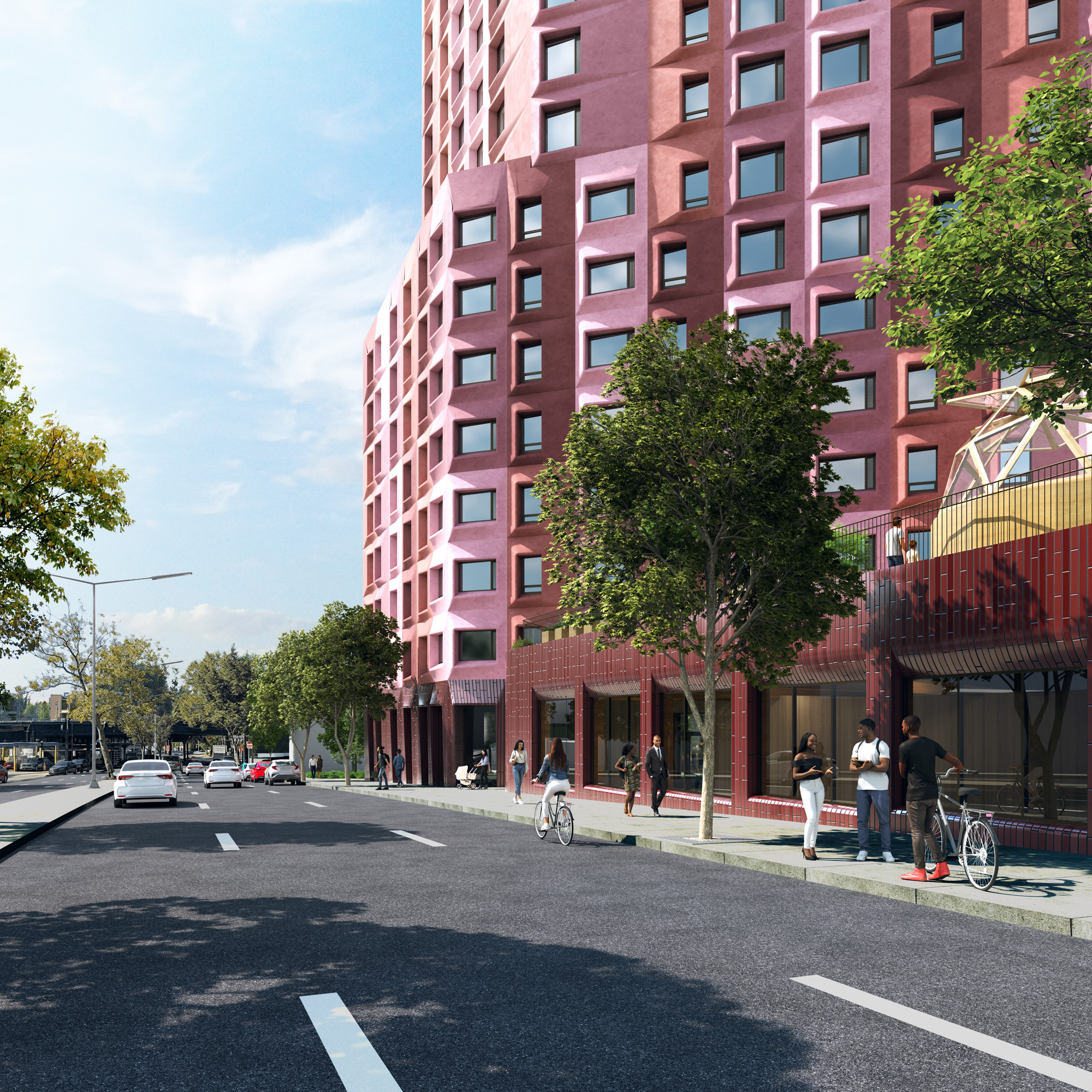
The self-shading façade makes living more affordable for residents by lowering energy use and thus utility bills.
Meeting its surroundings with a green plaza landscape, the building greets residents with a spacious residential lobby, full of natural light. Residential amenities and supportive services link to the lobby via a generous circulation loop. Animated with comfortable seating, art, plantings, and skylights, this loop transforms what could be a series of dim corridors into an inviting social network where residents can meet and get to know each other.
A large multipurpose room at the southeast corner serves as the building’s major gathering space. Structured with mass timber, its wood interior adds natural warmth to the activities taking place inside, while large doors allow those activities to spill outward into a courtyard garden. Additional shared gardens atop the 1-story podium are dedicated to edible plants, offering residents a green place to retreat or participate in the building’s urban agriculture programs.
The design is intended to demonstrate that ambitious sustainability measures are not only compatible with affordable housing but can strengthen the long-term viability of the development. Windows are calibrated to prioritize daylight, while the self-shading façade protects the interiors from too much hot sun, reducing energy use. This high-performance facade lowers costs for the operator and tenants to ensure affordable housing for generations. The solar-shading also lends the architecture a strong visual rhythm, uniting sustainability, efficiency, and high-quality design in a cohesive expression that supports better daily living for all New Yorkers.
Project Team
Tungsten Development Services Co., Owner’s Representative
SLCE Architects, Architect of Record
McNamara • Salvia, Structural Engineer
Marvel, Landscape Architect
Altera Engineering, MEP Engineer
Buro Happold, Facade/Waterproofing Consultant
Atelier Ten, Sustainability Consultant (Visioning)
Bright Power, Sustainability Consultant (Implementation)
Buro Happold, Lighting Design Consultant
ZBF Geothermal, Geothermal Consultant
Mueser Rutledge Consulting Engineers, Geotechnical Engineer
Longman Lindsey, Acoustic Consultant
AKRF, Civil Engineer and Environmental Consultant
Jenkins & Huntington, Vertical Transportation Consultant
JM Zoning, Expediting/Code Consultant